


?️ What Is Speech Therapy Treatment?
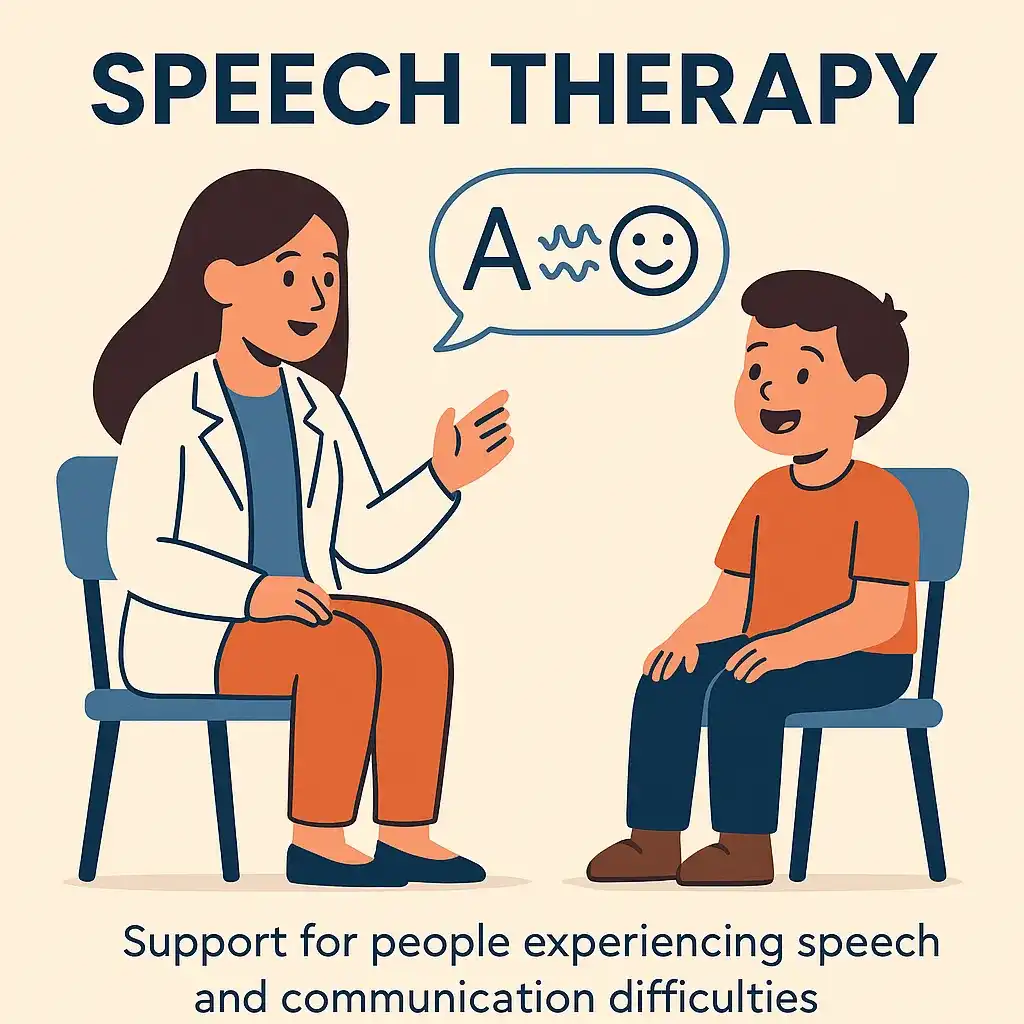
Speech therapy is support for individuals—both children and adults—experiencing speech and communication difficulties. It is conducted by professionals called Speech-Language Pathologists (SLPs), commonly known as speech therapists.
? How Does It Work?
SLPs start by assessing the individual to identify the specific type of speech or language disorder. Based on this diagnosis, they create a customized treatment plan to address the individual’s needs.
? Types of Disorders Treated with Speech Therapy
- Language Disorder: Difficulty understanding or forming words and sentences. Includes both receptive (understanding) and expressive (speaking) challenges.
- Articulation Disorder: Trouble pronouncing certain sounds correctly.
- Fluency Disorder: Conditions like stuttering, where speech is blocked or repeated.
- Voice Disorder: Issues with pitch, tone, volume, or quality of voice caused by vocal cord dysfunction.
- Cognitive-Communication Disorder: Difficulty communicating due to brain injury or neurological condition affecting thought processing.
- Aphasia: An acquired disorder that affects a person’s ability to speak, understand, read, and write—commonly caused by a stroke.
- Dysarthria: Slurred or slow speech due to weak or uncontrollable speech muscles—often linked to nervous system disorders.
? Speech Therapy for Children
Therapy for children is customized based on age, medical conditions, and type of disorder. During sessions, the SLP may:
- Engage the child through play, books, and pictures to encourage language development.
- Model correct sounds and syllables to teach proper pronunciation.
? Speech Therapy for Adults
Therapy for adults focuses on improving language, voice, articulation, and cognitive communication skills. Exercises and techniques are tailored to the individual’s needs.
??? How Can Parents Help?
Parents play a crucial role in their child’s speech development. Children make the best progress when parents:
- Participate in therapy activities and follow home-based tasks recommended by the SLP.
- Support and encourage the child patiently throughout the process.
Overcoming a speech or language disorder takes time and dedication. Patience, consistency, and family involvement are key to long-lasting improvement.